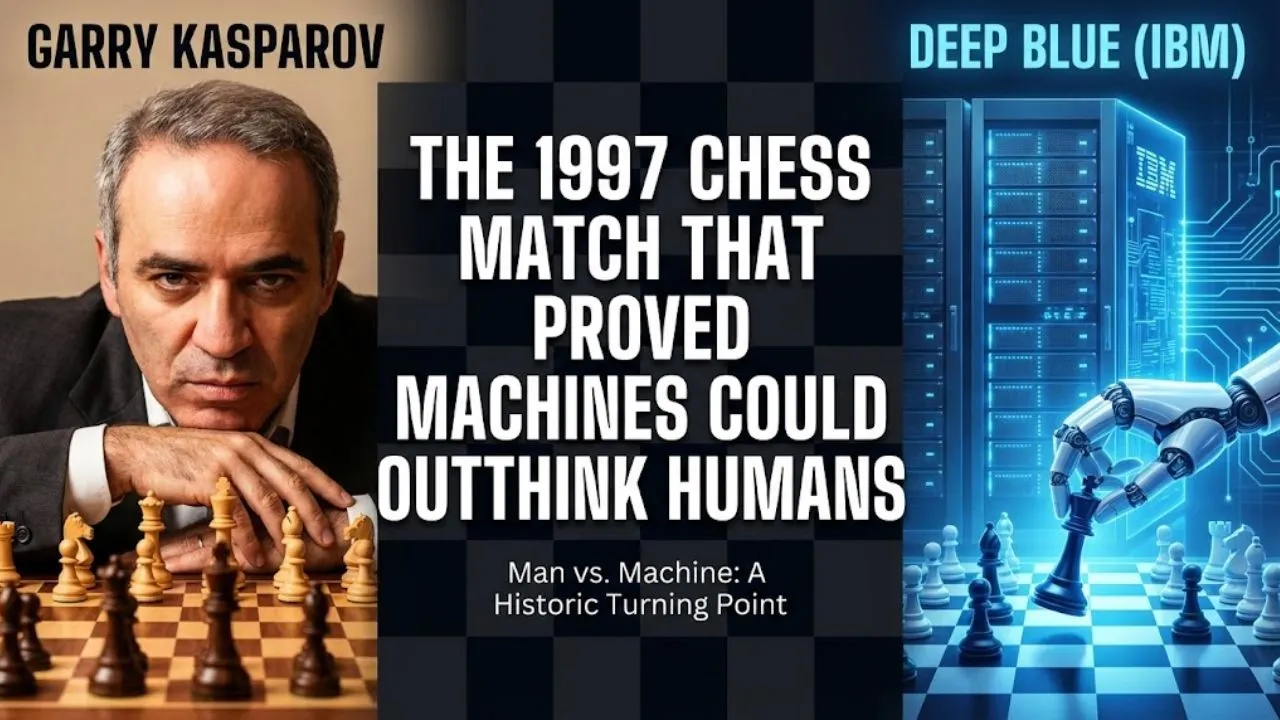
In May 1997, the world watched one of the most historic confrontations in computing history: IBM’s supercomputer Deep Blue faced off against Garry Kasparov, the reigning World Chess Champion and one of the greatest players of all time. The six-game match, held in New York City, ended with Deep Blue defeating Kasparov 3.5–2.5, marking the first time a computer beat a reigning world champion under tournament conditions. The event received unprecedented media coverage—far beyond any previous chess match—and became a defining moment in the history of artificial intelligence.
The Build-Up: A Decade of Preparation
IBM’s team had been working on chess-playing computers since the mid-1980s. Deep Blue’s predecessor had already beaten Kasparov in Game 1 of their 1996 match in Philadelphia, but Kasparov won the overall series 4-2. He dismissed the machine as a powerful calculator without true understanding.
Between 1996 and 1997, IBM made significant upgrades:
- Hardware: Deep Blue could evaluate 200 million positions per second.
- Software: Improved evaluation functions, massive opening books, endgame databases, and grandmaster-tuned heuristics.
- Testing: The team spent countless hours playing practice games and fixing bugs.
The chess world expected Kasparov to win easily. Most experts believed it would take decades before a computer could defeat the best human player.
The Match: Drama, Shock, and a Historic Win
Game 1 Deep Blue, playing white, stunned Kasparov with aggressive play, including a surprising knight sacrifice early in the game. Kasparov, visibly rattled, resigned after 45 moves. He later forfeited Game 2 in protest, believing there had been unfair intervention (claims later disproven).
After Game 2 the score stood: Deep Blue 2–0.
Kasparov fought back in Games 3–5, winning two and drawing one. But in Game 6 (May 11, 1997), Deep Blue delivered the decisive blow, winning convincingly. Final score: Deep Blue 3.5 – Kasparov 2.5.
Kasparov’s reaction was emotional: he gestured in frustration, stood up, and looked toward his mother in the audience. IBM team members were both elated and respectful.
Key Moments and Reactions
- Deep Blue’s aggressive style in Game 1 caught Kasparov off guard. He later admitted he wasn’t mentally prepared for the machine’s approach.
- Kasparov faced immense pressure throughout the match. Having his mother present added emotional weight.
- The IBM team had worked 12 years on the project. The victory was a long-awaited milestone.
Read Also: DENDRAL: The World’s First Expert System (1965–1980s)
Why It Mattered
Deep Blue’s victory proved that computers could excel at tasks requiring deep strategic thinking and creativity—skills once thought unique to humans. It challenged the idea that machines only “calculate” and lack understanding.
- It sparked widespread public interest in AI.
- It paved the way for later breakthroughs in game-playing AI.
- Chess gained massive global popularity after the match.
Legacy
Today, modern AI systems learn chess from scratch and surpass Deep Blue’s approach. Yet Deep Blue remains a landmark: the day machines first humbled the pinnacle of human genius.
The 1997 match wasn’t just about chess—it was about what intelligence means, and how far technology had come.
Disclaimer: This article summarizes the historical events of the 1997 Deep Blue vs. Kasparov match based on widely documented records and contemporary accounts.