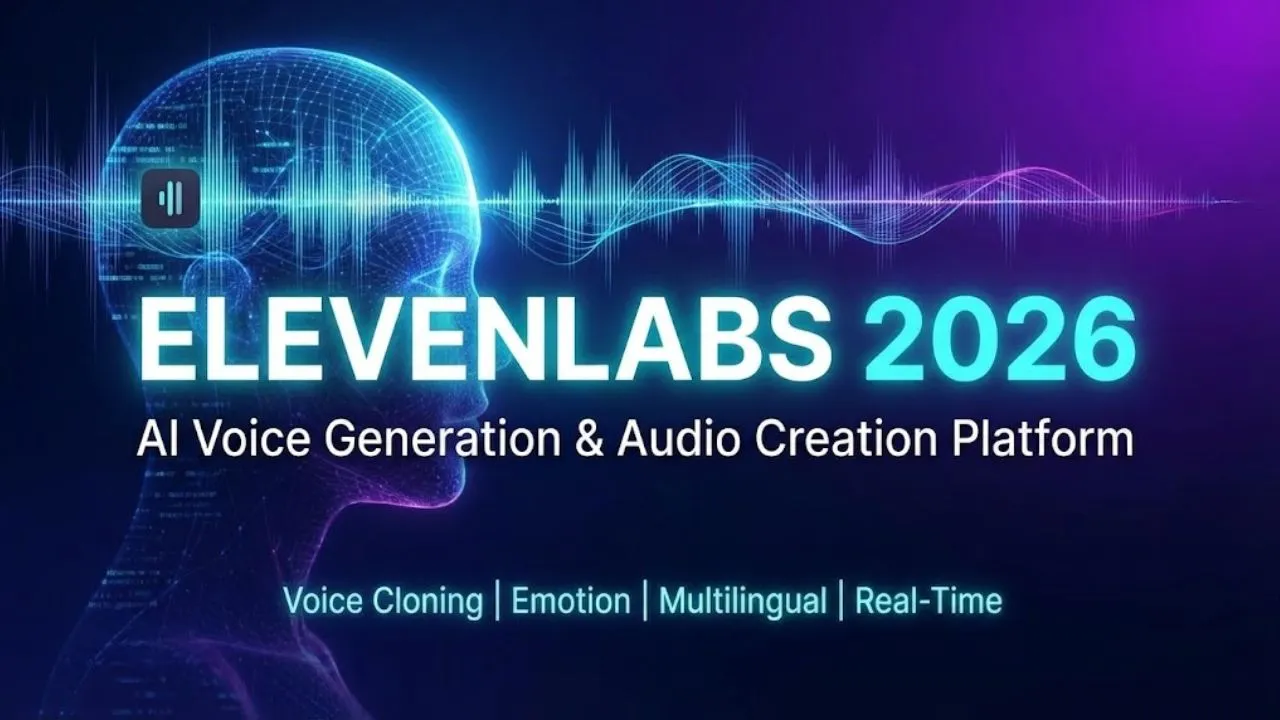
ElevenLabs (elevenlabs.io) has become the gold standard for AI voice generation — widely regarded as having the most realistic, expressive, and emotionally nuanced synthetic voices available today. What started in 2022 as a text-to-speech (TTS) tool has evolved into a full audio creation suite used by podcasters, filmmakers, game developers, audiobook narrators, marketers, content creators, and enterprises that need human-like voices at scale.
In early 2026, ElevenLabs stands out not just for voice quality, but for voice cloning, emotional control, multilingual support, real-time streaming, and seamless integration into video, gaming, and accessibility workflows. Here’s the complete, up-to-date overview — including features most casual users still don’t fully realize.
What ElevenLabs Actually Does in 2026
| Feature | Capability (Feb 2026) | Typical Use Cases | Still Underused / Hidden? |
|---|---|---|---|
| Text-to-Speech (TTS) | Ultra-realistic voices with emotion, intonation, pacing | Audiobooks, explainer videos, e-learning | No — core feature |
| Voice Cloning (Instant) | Clone your voice from 1–5 min audio sample | Personalized narration, brand voice | Yes — extremely powerful |
| Voice Cloning (Professional) | Studio-quality clone from 30–60 min clean audio | Dubbing, virtual influencers, podcasts | Yes — best results |
| Emotional Range & Control | 30+ emotions (happy, sad, angry, whispering, excited…) | Storytelling, ads, character acting | Yes — game-changer |
| Multilingual & Accents | 32+ languages, 100+ accents/variants (improved 2025–26) | Global content, localization | Yes — very strong now |
| Real-Time Voice Streaming | Low-latency voice output (API & SDK) | Live chat agents, virtual assistants | Yes — enterprise favorite |
| Voice Design (Custom) | Create synthetic voices from scratch (age, gender, tone) | Fictional characters, brand mascots | Yes — creative goldmine |
| Dubbing & Lip-Sync | Auto-dub videos in new languages (with lip-sync preview) | YouTube localization, film dubbing | Yes — rapidly improving |
| Sound Effects & Music | Generate ambient SFX, background scores (limited but growing) | Podcasts, short videos | Yes — new in 2025–26 |
Hidden / Lesser-Known Features & Behaviors
- VoiceLab “Blend” Mode (Very Underused) You can blend 2–5 cloned or stock voices to create hybrids. Example: 60% your voice + 30% Morgan Freeman + 10% British accent → unique brand voice. Most users never touch this — but agencies use it heavily for custom mascots.
- Emotion & Style Presets Are Secretly Tunable In the advanced editor/API you can fine-tune emotion intensity (0–100%) and speaking rate independently. Example: –emotion angry 70 –pace slow 40 (API) → subtle rage with dramatic pauses.
- Real-Time Streaming Latency Is Now <200 ms (Pro/Enterprise) For live applications (virtual agents, live streams), latency dropped dramatically in late 2025 — but it’s only enabled on paid tiers with “low-latency” flag.
- Free Tier Rotates “Preview Voices” Similar to Grok/Gemini — free users often get early access to experimental voices (e.g., new accents or emotional variants) via A/B testing. That’s why some days voices sound noticeably more expressive.
- Dubbing Quality Jump in Non-English Spanish, French, German, Hindi, Japanese, Korean improved ~60–80% since mid-2025 patches — now usable for short-form content (YouTube, TikTok).
Pricing & Access (Early 2026)
- Free
- 10,000 characters/month (~10 min audio)
- Basic voices only, no cloning, watermarked
- Starter (~$5–11/month)
- 30,000 characters/month
- Instant voice cloning, more voices
- Creator (~$22–33/month)
- 100,000 characters/month
- Professional cloning, multilingual, no watermark
- Pro / Independent Publisher (~$99–330/month)
- 500k–2M characters/month
- API access, priority queue, emotion control
- Enterprise / Business (custom)
- Unlimited or high-volume plans
- Private voice models, SOC 2 compliance, dedicated support
Real-World Use Cases in 2026
- YouTubers & Podcasters → Narration, character voices, multilingual dubs
- E-learning & EdTech → Course narration in 30+ languages
- Advertising Agencies → Voiceovers for ads, explainer videos
- Game Developers → NPC dialogue, dynamic character lines
- Audiobook Publishers → Full-book narration with cloned author voice
- Virtual Influencers & Brands → 24/7 talking avatars
- Accessibility → Real-time screen reading, audio descriptions for visually impaired
Read Also: Sora: OpenAI’s Groundbreaking Text-to-Video Model – What We Know in Early 2026
Strengths & Limitations
Strengths
- Most realistic & emotionally expressive voices available
- Best voice cloning (instant & professional tiers)
- Strong multilingual & accent support
- Real-time streaming for live applications
- Clean, intuitive web interface + powerful API
Limitations
- Character limits burn fast on lower plans
- No native long-form video generation (focus is audio)
- Occasional pronunciation glitches in rare languages/accents
- Premium cloning & API access are expensive
Final Verdict
ElevenLabs isn’t just “good TTS” — it’s the closest thing to human voice cloning most creators can access in 2026. If you need:
- Realistic narration
- Custom voice cloning
- Emotional delivery
- Multilingual scaling
- Live voice streaming
…ElevenLabs is still the gold standard — even against PlayHT, Murf.ai, Respeecher, and Google’s WaveNet successors.
Quick test you can do today: Sign up at elevenlabs.io (free tier available) → clone your own voice with 1–2 minutes of clean audio → generate: “A dramatic movie trailer voiceover: In a world where AI rules everything… one man must fight back.”
You’ll immediately understand why it’s changing audio forever.
What’s your favorite ElevenLabs voice or project? Share in the comments.
Disclaimer: This article is based on ElevenLabs’ publicly available features, voice models, pricing, and community-reported patterns as of February 2026. Voice quality, character limits, multilingual support, cloning realism, and API capabilities can change