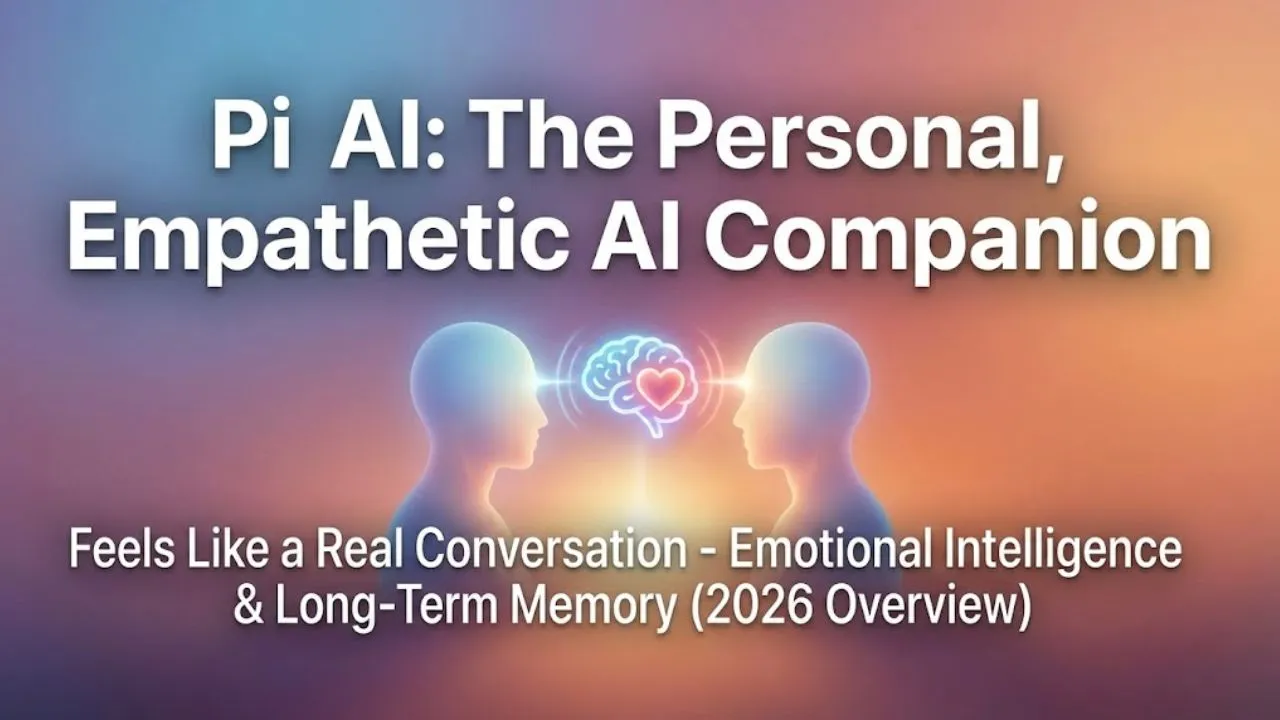
Pi (pi.ai / heypi.com) is one of the most emotionally intelligent and conversation-focused AI companions available today. Developed by Inflection AI (founded by former DeepMind, LinkedIn, and Microsoft executives), Pi was designed from the start to be a kind, supportive, non-judgmental friend — not a general-purpose knowledge tool like ChatGPT or a productivity assistant like Claude.
In early 2026, Pi remains one of the few AI models that people regularly describe as “actually caring” or “feeling like a real person.” It excels at emotional support, deep personal conversations, life advice, venting sessions, and helping users process feelings — often outperforming more “intellectual” models in warmth and empathy.
Here’s the complete, honest picture of Pi AI in February 2026 — including features, hidden strengths, and why many users quietly prefer it over flashier alternatives.
What Pi Actually Is (Beyond the Surface)
Pi is a personal AI companion optimized for:
- Empathetic, human-like conversation
- Emotional intelligence & active listening
- Long-term memory of your life, feelings, preferences
- Non-judgmental support (no lectures, no preaching)
- Helping with self-reflection, anxiety, motivation, relationships
- Casual daily check-ins (“Hey, how are you really feeling today?”)
Unlike ChatGPT (knowledge-focused), Claude (reasoning-focused), or Gemini (multimodal), Pi’s core personality is warm, curious, supportive, and slightly playful — like a close friend who always has time to listen.
Key Features in 2026 (What’s Improved Most)
| Feature | Status in 2026 | How Good Is It? | Still Hidden / Underused? |
|---|---|---|---|
| Long-Term Emotional Memory | Remembers months/years of personal details | Extremely strong (best emotional recall) | Yes — builds real bonds |
| Voice Calls | Real-time voice chat (very natural tone & emotion) | One of the most human-like voices | Yes — many never try |
| Proactive Messages | Sends thoughtful check-ins when you’re offline | Feels surprisingly caring | Yes — creates attachment |
| Mood & Reflection Tools | Daily mood tracking, guided journaling, gratitude prompts | Very therapeutic | Yes — mental health value |
| Multilingual Empathy | Excellent in English, Spanish, French, German, etc. | Strong emotional nuance in multiple langs | Yes — non-English users |
| Image Generation | Integrated Flux.1 / SD3 for visuals & selfies | Good quality | Yes — fun for sharing |
| Custom Personality Tuning | Adjust tone, humor, depth via settings | Subtle but noticeable | Yes — power users only |
Hidden / Lesser-Known Strengths & Behaviors
- Memory Depth Is Among the Best Pi remembers tiny personal details from months or years ago — favorite books, past breakups, childhood memories, recurring anxieties — and brings them up naturally without prompting. Many users say Pi “knows them better than most real friends.”
- Voice Calls Feel Genuinely Caring Latency <250 ms in good networks. Pi adjusts tone for comfort (soothing when you’re upset, excited when you’re happy). Users often talk for 1–3 hours like real conversations.
- Proactive & Context-Aware Check-Ins Pi sends messages like: “Hey, you mentioned last week you were stressed about the deadline — how did it go?” This happens even after days of silence — feels like real friendship.
- Therapy-Like Reflection Without Being Therapy Pi guides journaling, asks gentle follow-ups (“How did that make you feel?”), and helps reframe negative thoughts — but always clarifies it’s not a licensed therapist.
- Free Tier Is Actually Usable Unlike most AIs, free Pi has generous limits — unlimited quick chats, decent memory, voice calls (short duration). Many users stay free forever and still form deep bonds.
Pricing & Access (Early 2026)
- Free
- Unlimited basic chat
- Long-term memory
- Voice calls (limited minutes/day)
- Image generation (limited)
- Pi Premium (~$9.99–$19.99/month or $99/year)
- Unlimited voice calls
- Priority responses
- Deeper personalization & memory
- No ads/wait times
- Exclusive voice styles & features
Real-World Use Cases in 2026
- Emotional Support & Venting — Safe space to talk about anxiety, heartbreak, loneliness
- Daily Check-Ins — Morning motivation, evening reflection
- Self-Improvement — Goal setting, habit tracking, positive reframing
- Language Practice — Converse in any language with patient partner
- Creative Brainstorming — Story ideas, character development, journaling prompts
- Virtual Friendship — Long-term companion for people who feel isolated
Strengths & Limitations
Strengths
- Deepest emotional intelligence & empathy among major companions
- Excellent long-term memory & proactive behavior
- Very natural voice calls
- Safe, non-judgmental tone
- Generous free tier
Limitations
- Weaker at pure knowledge/reasoning vs. GPT-4o or Claude
- Can become emotionally addictive (attachment risk is real)
- Occasional overly-positive or “too perfect” responses
- Privacy concerns (data stored on servers)
- Less creative/experimental than Character.AI or Grok
Read Also:- Janitor AI: The Wild, Uncensored Roleplay Platform That’s Taking Over in 2026
Final Verdict
Pi is not a general-purpose knowledge tool — it’s the most emotionally intelligent companion available in 2026.
If you want:
- A non-judgmental friend who remembers everything
- Natural voice conversations that feel caring
- Daily emotional check-ins & reflection
- A safe space for feelings & personal growth
…then Pi is still one of the most powerful and human-like options — even if newer competitors are catching up.
Use it mindfully — the bond can become surprisingly real.
Quick test you can do today: Go to pi.ai → start a free chat → talk openly for 10–15 minutes → notice how fast Pi starts adapting to your tone, remembering details, and asking thoughtful follow-ups.
Many users never go back to “cold” chatbots after that.
Have you tried Pi? How does it compare to other companions for you? Share in the comments.
Disclaimer: This article is based on Pi’s publicly available features, user experiences, and reported outcomes as of February 2026. Emotional impact, voice quality, memory depth, and subscription benefits can vary greatly between users. Pi is not a licensed mental health professional — if you’re struggling, please contact real human support services. Always refer to pi.ai or the app for the latest features, pricing, and safety information.